
A Beginner’s Guide to Laboratory Tools and Their Uses in Scientific Research
Laboratories are essential environments for scientific discovery, education, and quality control. For beginners, understanding the various laboratory tools and their specific functions is crucial for navigating these spaces effectively. This guide introduces key laboratory equipment, focusing on essential chemistry lab tools used in middle school settings and beyond.
Familiarity with laboratory instruments not only enhances learning but also ensures accurate results in experiments. Commonly used tools such as beakers, pipettes, and Bunsen burners play significant roles in various scientific applications. By learning how to use them correctly, individuals can contribute confidently to experiments and research.
This introduction serves as a foundation for those looking to deepen their knowledge about laboratory practices. Readers will explore the features and uses of vital equipment, empowering them to approach scientific challenges with a clearer understanding of their tools.
Understanding Basic Laboratory Equipment
Laboratory equipment comes in various forms, each designed for specific tasks. Familiarity with these tools is crucial for effective experimentation and accurate results. This section focuses on essential equipment used in laboratories, including glassware for mixing and measuring liquids.
Beakers and Flasks
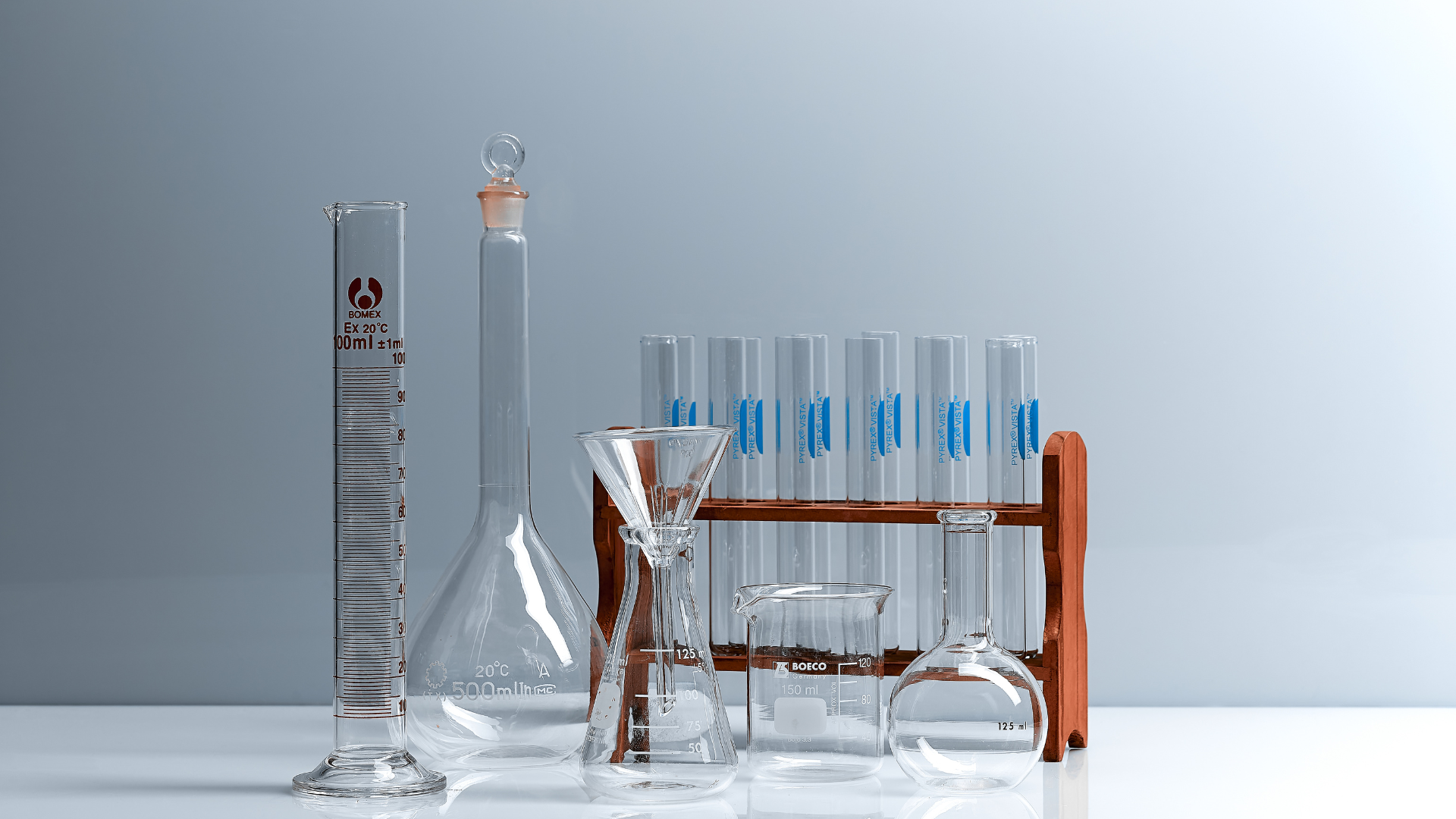
Beakers are simple cylindrical containers, usually made of glass or plastic, used for holding, mixing, and heating liquids. They typically have a spout for easy pouring and come in various sizes. Volumetric flasks, on the other hand, are designed for measuring precise volumes of liquids. Their narrow neck and flat bottom allow for accurate dilution and preparation of solutions.
Each piece of glassware has a graduation mark to indicate volume, but only volumetric flasks provide precise measurements. When using beakers, the following technique is recommended:
- Carefully pour liquids
- Avoid overfilling to prevent spills
- Use beakers for rough measurements
Safety is also important when handling these tools. Always use appropriate personal protective equipment (PPE), such as gloves and safety goggles.
Test Tubes and Holders27/01/2026
Test tubes are small, cylindrical glass containers used for chemical reactions, sample mixing, and testing. They are versatile tools that allow for observation without the need for larger volumes. Test tube holders provide a safe way to handle test tubes, especially when heating substances.
When using test tubes, consider the following points:
- Ensure test tubes are clean before use
- Use a test tube holder to avoid burns
- Labelling test tubes can help in identifying samples
Additionally, clamps and ring stands can be used to secure test tubes during heating or experiments. This prevents accidents and improves safety during procedures.
Measuring Liquids Accurately
Accurate volume measurement is essential in laboratory work. Burettes, pipettes, and graduated cylinders are instruments used for precise liquid measurements. Burettes are commonly used for titration processes, dispensing measured volumes of liquid with high accuracy.
Pipettes are vital for transferring small quantities of liquids, allowing for control over volumes. Graduated cylinders offer a convenient way to measure larger volumes with clear graduation marks for easy reading.
When measuring liquids, it is important to consider:
- The meniscus level when reading measurements
- Calibration of measuring devices
- Proper technique to minimise errors
Using these tools correctly can significantly enhance the reliability of experimental results.
Heat Sources and Temperature Control
Heat sources and methods for temperature control are fundamental in laboratory settings. They facilitate various reactions and processes, allowing for precise manipulation of conditions during experiments.
Bunsen Burners and Hotplates
Bunsen burners are a staple in many laboratories. They provide a controllable flame that is useful for heating substances quickly. The flame’s intensity can be adjusted by manipulating the air supply and gas flow, which allows for greater control during mixing and heating.
Hotplates are another common heating tool. They offer a flat, heated surface for vessels like beakers or flasks. Hotplates typically allow for more uniform heating and can be adjusted digitally for specific temperatures. Both tools are chosen based on speed and the type of heat required.
Monitoring Temperature
Monitoring temperature accurately is essential for reliable results. Thermometers are widely used, with options ranging from traditional glass thermometers to digital variants. Digital thermometers often provide faster readings and greater precision.
Another method is the use of temperature probes attached to data loggers, which can record temperature changes over time. This is especially useful in experiments requiring consistent heating. Temperature control is crucial in reactions, as variations can significantly influence outcomes.
Storing and Preserving Samples
Effective storage and preservation of samples are crucial for maintaining their integrity and reliability in laboratory settings. Proper techniques prevent contamination and degradation, ensuring accurate results in experiments.
The Role of Desiccators
Desiccators are airtight containers designed to keep samples dry and uncontaminated. They contain a desiccant, often silica gel, that absorbs moisture, which is essential in preventing sample degradation.
When storing samples in a desiccator, ensure they are placed on a stable surface, away from vibrations. It is important to check the desiccant regularly and replace it when saturated.
Desiccators come in various types, including vacuum desiccators, which enhance moisture control. Proper use of desiccators can extend the life of sensitive samples, including powders and biological materials.
Comments (0)